Technical Japanese #29 — HORENSO: Report, Inform and Consult in a Japanese Workplace
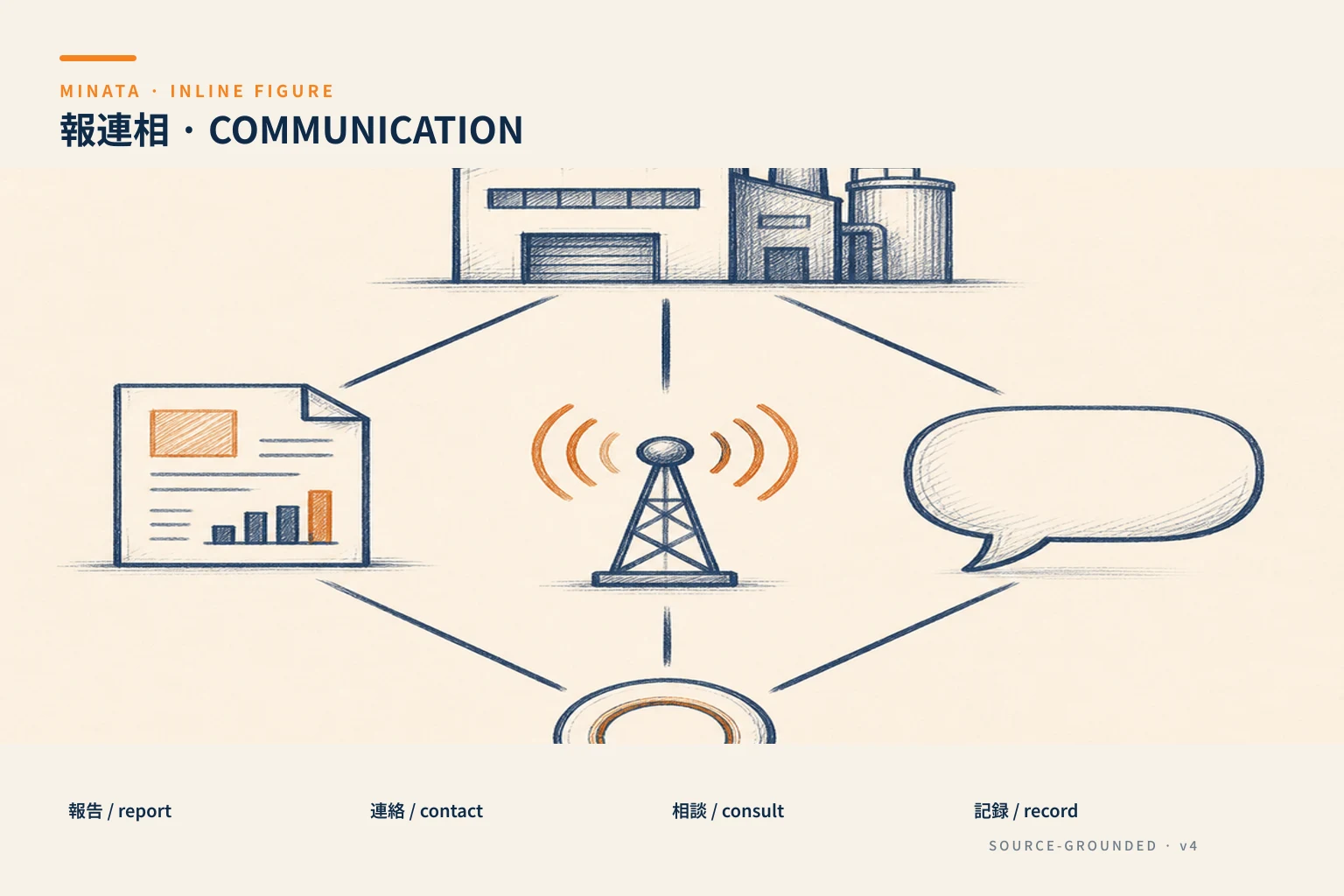
In a Japanese company one skill is judged almost as hard as your craft: 報連相 (HORENSO), short for 報告 report, 連絡 inform and 相談 consult. An engineer who is excellent at the work but "goes quiet and handles it alone" is rated poorly here. This post covers the three branches and the phrases that go with each.
Core vocabulary of 報連相
| Japanese | Reading | Meaning | On the floor | Note |
|---|
| 報連相 | ほうれんそう hōrensō | report, inform, consult | 報連相を徹底 | Three habits in one word |
| 報告 | ほうこく hōkoku | report | 進捗を報告 | Results and progress |
| 連絡 | れんらく renraku | inform, notify | 変更を連絡 | Sharing information |
| 相談 | そうだん sōdan | consult | 上司に相談 | When you are unsure |
| 上司 | じょうし jōshi | superior | 上司に報告 | Your direct boss |
| 進捗 | しんちょく shinchoku | progress | 進捗確認 | Progress |
| 結果 | けっか kekka | result | 結果を報告 | Outcome |
| 不具合 | ふぐあい fuguai | fault, problem | 不具合発生 | See #32 |
| 早め | はやめ hayame | early | 早めに報告 | Sooner rather than later |
| 中間 | ちゅうかん chūkan | interim | 中間報告 | A report partway through |
| 結論から | けつろんから ketsuron kara | conclusion first | 結論から言う | Lead with the answer |
| 事実 | じじつ jijitsu | fact | 事実を伝える | Fact |
| 意見 | いけん iken | opinion | 意見は分けて | Keep it separate from fact |
| 失礼します | しつれいします shitsurei shimasu | excuse me | Opening a conversation | How you break in |
| 今よろしいですか | いま ima yoroshii desu ka | is now a good time? | Before consulting | Asking for their time |
When each branch applies
- 報告 — after the work is done or a milestone is reached, and immediately when something goes wrong. Do not wait to be asked.
- 連絡 — sharing information or a change with the people affected: a schedule change, a material change, a customer visit. No judgement attached.
- 相談 — when you are unsure, or the decision is above your authority. Ask before you decide, not after it has gone wrong.
The delivery rule: 結論から, conclusion first, then the reason, then the detail. And keep 事実 (fact) separate from 意見 (your opinion).
Phrases by situation
Opening and reporting
- 失礼します。今よろしいですか。 — Excuse me, is now a good time?
- 結論から報告します。○○が完了しました。 — Conclusion first: ○○ is complete.
- 中間報告ですが、進捗は70%です。 — An interim report: progress is 70%.
Informing and consulting
- 変更がありましたのでご連絡します。 — There has been a change, so I am letting you know.
- 判断に迷うので相談させてください。 — I am unsure of the judgement, so let me consult you.
Mistakes to avoid
| Mistake | Why it hurts |
|---|
| Going quiet and handling a 不具合 alone | In Japan this is treated as worse than the problem itself. Report early (早めに報告) |
| Rambling instead of leading with 結論から | Your manager loses patience and the important part gets buried |
| Mixing 事実 with 意見 | Saying "it is probably fine" before you have checked leads to a wrong decision |
Hear it, then act — quick self-check
You spot signs of a defect in a lot but you are not certain. What does HORENSO say to do?
<details><summary>Answer</summary>相談 plus 早めに報告. Tell your superior early, state the fact ("this lot shows sign X, not yet confirmed"), keep it separate from your opinion, and consult before deciding on your own whether to run on or stop.</details>
Your manager says: 「報告は結論から。事実と意見は分けて。」
<details><summary>Answer</summary>Lead your report with the conclusion, and keep fact separate from opinion.</details>
How MINATA helps
Does your team work with Japanese management and need the reporting culture aligned so the two sides stop talking past each other? MINATA works as the Japan–Vietnam technical bridge: setting up the 報連相 flow, the report templates and the project coordination. See our Japan–Vietnam projects or Japan–Vietnam business services.
View all MINATA technical articles