Technical Japanese #31 — Writing a Japanese Technical Report (報告書)
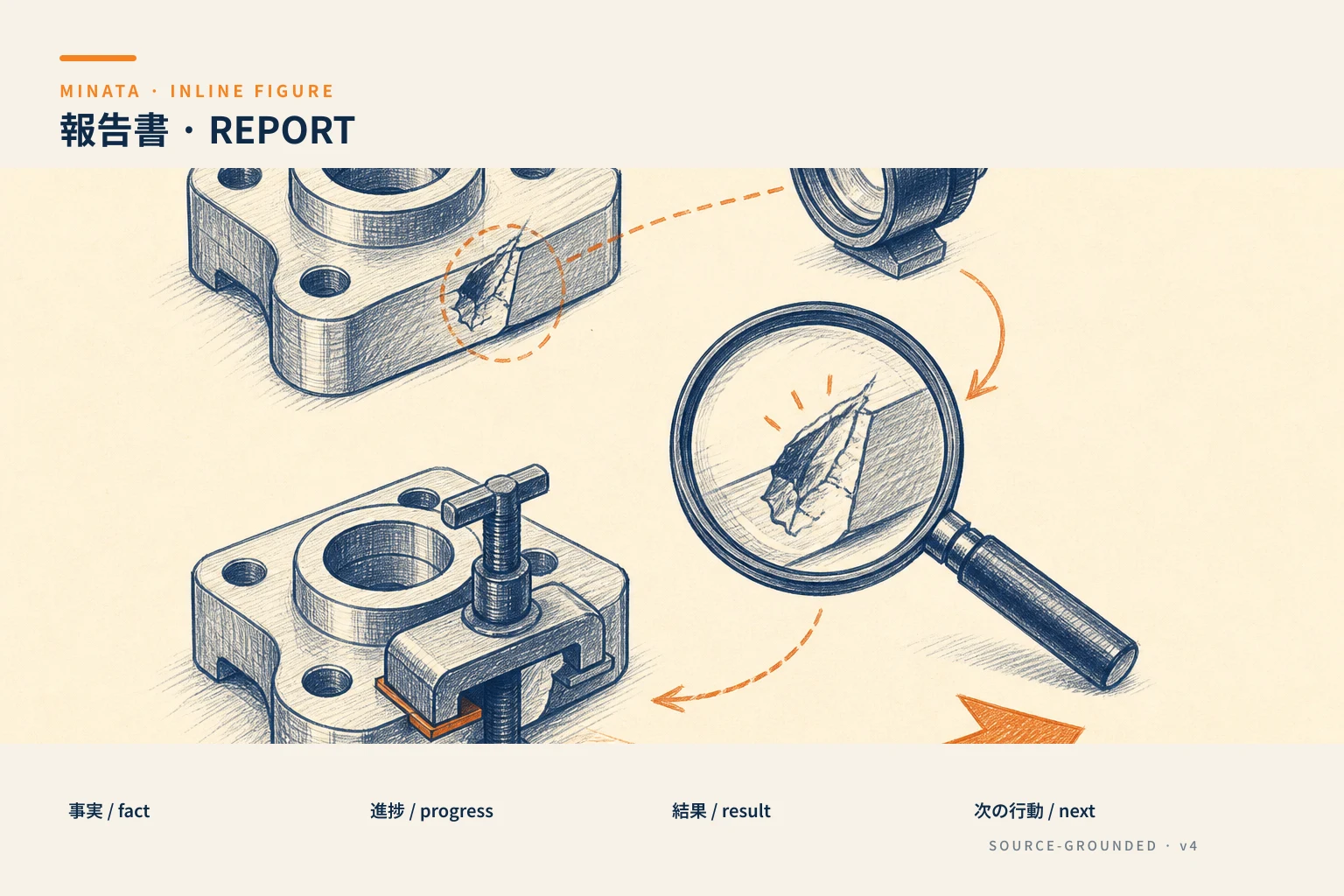
The 報告書 is how a Japanese workplace keeps a record: faults, progress and inspection results each have their own template. A good one puts the facts first and the analysis second, stays short, and carries evidence. This post gives you the frame and the vocabulary for the three you will write most.
Core vocabulary of the 報告書
| Japanese | Reading | Meaning | In the report | Note |
|---|
| 報告書 | ほうこくしょ hōkokusho | report | Title | The document |
| 作成日 | さくせいび sakuseibi | date prepared | Header | Date |
| 作成者 | さくせいしゃ sakuseisha | prepared by | Header | Author |
| 概要 | がいよう gaiyō | summary | Section 1 | Summary |
| 現状 | げんじょう genjō | current situation | Section | Where things stand |
| 不具合 | ふぐあい fuguai | fault, defect | Subject | The problem |
| 原因 | げんいん gen'in | cause | Analysis | Cause |
| 応急処置 | おうきゅうしょち ōkyū shochi | temporary action | Immediate response | What you did at once |
| 恒久対策 | こうきゅうたいさく kōkyū taisaku | permanent countermeasure | Prevention | The lasting fix |
| 再発 | さいはつ saihatsu | recurrence | 再発防止 | Happening again |
| 結果 | けっか kekka | result | Section | Result |
| 進捗 | しんちょく shinchoku | progress | Section | Progress |
| 予定 | よてい yotei | plan | What comes next | Planned |
| 課題 | かだい kadai | open issue | What remains | Issue |
| 対策 | たいさく taisaku | countermeasure | Solution | Countermeasure |
| 添付 | てんぷ tenpu | attachment | End | Evidence |
The three frames
不具合報告書 — fault report
- 概要 — what happened, when, where, in one or two lines.
- 現状 / 事実 — an objective description: the symptom, how many pieces are affected.
- 原因 — the cause. If it is not yet known, write 調査中.
- 応急処置 — what has been done as an immediate measure.
- 恒久対策 / 再発防止 — how recurrence will be prevented.
進捗報告書 — progress report
進捗 (percentage or milestone against 予定), then 課題 (what is blocking), then 対策 and 次の予定 (what happens next).
検査報告書 — inspection report
対象 and 数量 (what was inspected and how many), 結果 (合格 or 不合格, with figures), 判定 and 所見 (the conclusion), and 添付 (the measurement data).
Rules for writing one
- 事実, then 分析, then 対策. Do not mix judgement into the description of what happened.
- Write in numbers. 「不良が多い」 is weak; 「不良率3.2%」 is not.
- Conclusion first. State the outcome and the severity at the top.
- When the cause is unknown, write 調査中. Never invent one.
Phrases by situation
- 不具合が発生しましたので報告いたします。 — A fault has occurred, so I am reporting it.
- 原因は現在調査中です。 — The cause is under investigation.
- 応急処置として○○を実施しました。 — We carried out ○○ as an immediate measure.
- 再発防止策を検討中です。 — We are working out how to prevent recurrence.
Mistakes to avoid
| Mistake | Why it hurts |
|---|
| Writing a vague 原因 to avoid responsibility | You lose credibility. 調査中 is better than a guess dressed as a cause |
| Leaving out 応急処置 and 恒久対策 | The report describes trouble without showing that anything is being done |
| No 添付 — no evidence or figures | The conclusion carries no weight |
Read it, then act — quick self-check
Your manager asks for a 不具合報告書. What three sections must it contain at minimum?
<details><summary>Answer</summary>現状/事実 (the objective description), 原因 (or 調査中), and 対策 (応急処置 plus 恒久対策/再発防止). With a 概要 at the top and 添付 evidence where you have it.</details>
Rewrite this so it carries weight: 「不良が結構出ています。」
<details><summary>Answer</summary>Put a number on it: 「不良率が3.2%で、基準の1%を超えています。」 — a fact with a figure rather than an impression.</details>
How MINATA helps
Do you need 不具合報告書, 進捗報告書 and 検査報告書 templates standardised in Japanese and Vietnamese, so the team reports the way a Japanese customer expects? MINATA designs the forms, writes the guidance and carries the reporting for the project. See our Japan–Vietnam projects or Japan–Vietnam business services.
View all MINATA technical articles