Technical Japanese #22 — Machining Notes on Japanese Drawings: Chamfer, Deburr and Counterbore
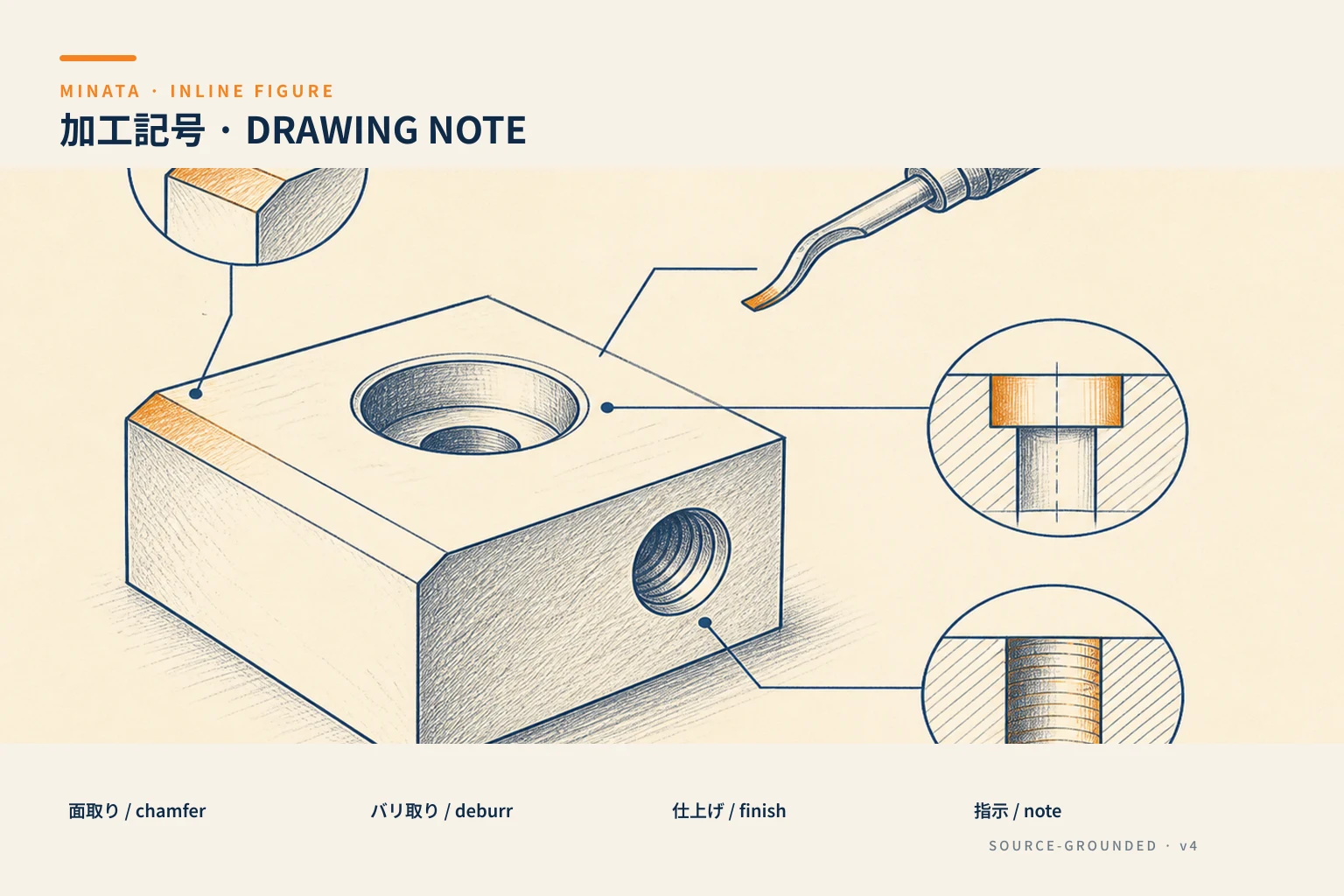
Beyond dimensions and tolerances, a Japanese drawing is full of machining notes (加工指示) — small lines like 面取り, バリ取り and 仕上げ that decide whether the part passes or is rejected at 検査. Miss one and the job is remade. This post gathers the notes you meet most often.
Core vocabulary for machining notes
| Japanese | Reading | Meaning | On the drawing | Note |
|---|
| 面取り | めんとり mentori | chamfer | C1 面取り | Marked with C |
| 隅R / フィレット | すみアール sumi āru | fillet | R3 | Marked with R |
| バリ取り | ばりとり baritori | deburring | バリ取りのこと | Removes the sharp edge |
| 仕上げ | しあげ shiage | finish | 仕上げ面 | The finished surface |
| 表面粗さ | ひょうめんあらさ hyōmen arasa | surface roughness | Ra1.6 | Marked Ra, Rz or the triangle |
| 加工基準 | かこうきじゅん kakō kijun | machining datum | 加工基準面 | The face you machine from |
| 全周 | ぜんしゅう zenshū | all round | 全周溶接 | Around the whole perimeter |
| 両面 | りょうめん ryōmen | both faces | 両面フライス | Both sides |
| 指示なし | しじなし shiji nashi | not specified | 指示なき所 | "Where nothing is stated" |
| 一般 | いっぱん ippan | general | 一般公差 | General tolerance |
| ねじ | neji | thread | M8ねじ | Tapping |
| タップ | tappu | tapped hole | タップ穴 | Tapped hole |
| 貫通 | かんつう kantsū | through | 貫通穴 | Through hole |
| 止まり | とまり tomari | blind | 止まり穴 | Blind hole |
| 皿もみ | さらもみ saramomi | countersink | 皿もみ加工 | Countersink |
| 座ぐり | ざぐり zaguri | counterbore | 座ぐり深さ | Counterbore |
| 磨き | みがき migaki | polishing | 鏡面磨き | Mirror polish |
| 注記 | ちゅうき chūki | notes | 注記1参照 | General notes |
The general 注記 block
Many drawings carry a 注記 block that applies to the whole part, for example:
- 指示なき角はC0.5とする。 — Any corner not otherwise specified takes a C0.5 chamfer.
- バリを完全に除去すること。 — All burrs are to be removed completely.
- 一般公差はJIS B 0405 中級による。 — General tolerances follow JIS B 0405, medium class.
- 指示なき表面粗さはRa6.3。 — Where roughness is not stated, it is Ra6.3.
These are easy to miss because they sit outside the drawing view, but they bind exactly as a dimension does.
Phrases by situation
Asking about and confirming a note
- この面取りはC何ですか。 — What size is this chamfer?
- バリ取りの指示はありますか。 — Is deburring specified?
- 仕上げはどの程度必要ですか。 — What level of finish is required?
Reporting
- 全周バリ取りを完了しました。 — Deburring is complete all the way round.
Mistakes to avoid
| Mistake | Why it hurts |
|---|
| Skipping the general 注記 block | Chamfers and deburring get missed on dozens of corners, and the lot comes back from 検査 |
| Confusing 座ぐり (counterbore) with 皿もみ (countersink) | The bolt head does not seat properly |
| Confusing 貫通 (through hole) with 止まり (blind hole) | The part is drilled through and ruined |
Read it, then act — quick self-check
The drawing says: 「指示なき角はC0.5、バリ取りのこと。」
<details><summary>Answer</summary>Every corner not specified individually takes a C0.5 chamfer, and the part is to be deburred (バリ取り) throughout. It is a note that applies to the whole drawing.</details>
The drawing says: M8 タップ、止まり穴 深さ15.
<details><summary>Answer</summary>Tap an M8 thread in a blind hole (止まり穴), 15 mm deep. Do not drill through.</details>
How MINATA helps
Do you need every machining note — 面取り, バリ取り, 仕上げ and the JIS notes — extracted from a Japanese drawing into clear instructions for a Vietnamese shop? MINATA reads them, standardises them and supervises the work so no line of the 注記 is lost. See our Japan–Vietnam projects or engineering and production services.
View all MINATA technical articles